dune-minimal
Minimal, semantic base theme for Dune. Usable on its own (a clean, classless-ish blog/docs look), but primarily designed to be inherited:
# themes/my-theme/theme.yaml
name: my-theme
parent: dune-minimal
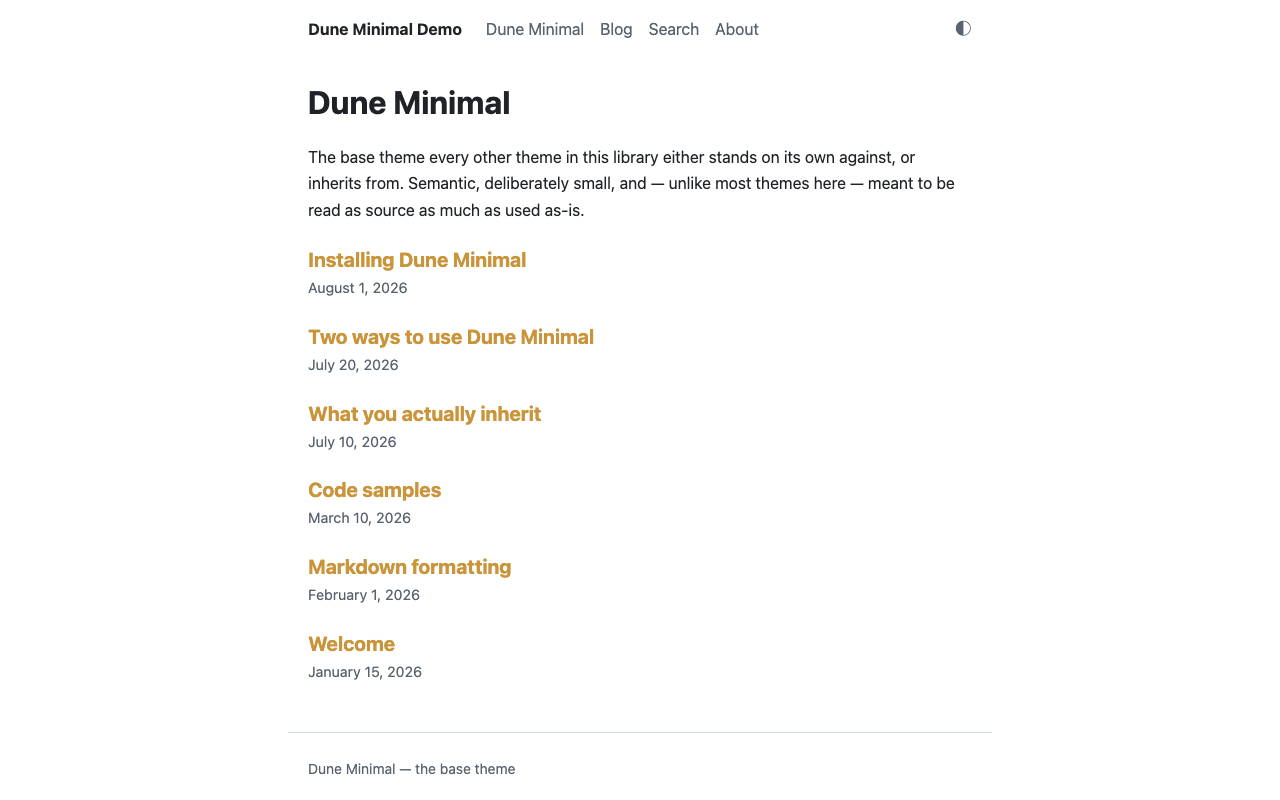
Demo: https://themes.getdune.org/dune-minimal
Tags: dune-theme, base, minimal, blog
Install
dune theme:install jsr:@dune/theme-dune-minimal@1.0.1 --activate
Or by hand, in config/site.yaml:
themes:
  - name: dune-minimal
    src: jsr:@dune/theme-dune-minimal@1.0.1

theme:
  name: dune-minimal
  src: jsr:@dune/theme-dune-minimal@1.0.1
To inherit from it instead of using it standalone, set parent: dune-minimal
in your own theme's theme.yaml (see below) — dune theme:install resolves
and registers it automatically as a dependency when it detects the parent:
declaration on the theme you're installing.
What you get by inheriting
Dune resolves the theme chain child → parent for each of these:
| Mechanism | Behaviour |
|---|---|
templates/*.tsx |
Any template your theme doesn't define falls back to the base (whole-file override — no partial/block inheritance) |
components/layout.tsx |
The Layout prop passed to every template resolves through the chain — base templates automatically render inside your layout once you define one |
locales/*.json |
Merged; your keys override base keys. Templates receive the merged strings via the t() prop |
islands/ |
Collected across the whole chain |
The base provides: default, post, blog, section, search, error
templates; a layout with correct head metadata (title/description/canonical/
Open Graph), RTL dir, and a persisted dark-mode toggle; and reusable
components (head.tsx, nav.tsx, post-meta.tsx, pagination.tsx,
tag-list.tsx).
Two ways to build a child theme
Pattern A — derived skin (restyle the base)
Keep all base templates and markup; change the look via CSS tokens. Your theme needs only two files:
themes/my-theme/
├── theme.yaml            # name + parent: dune-minimal
└── static/style.css
/* themes/my-theme/static/style.css */
@import url("/themes/dune-minimal/static/style.css");

:root {
  --accent: #c9943a;
  --bg: #faf6ef;
  --font-body: Georgia, serif;
  --content-width: 40rem;
}
.dark { --bg: #1a150e; }
The base layout always links /themes/<active-theme>/static/style.css, so a
child must ship a style.css (starting with the @import above).
Override individual templates only where the markup itself needs to differ.
Pattern B — independent look (own layout, borrow behaviour)
Ship your own components/layout.tsx and main templates with their own
markup and a fully independent stylesheet. Inherit the behavioural
templates you'd otherwise have to reimplement — search, error,
section — which automatically render inside your layout via the
Layout prop. Style their semantic hooks in your CSS:
form[role="search"] { … }
.search-results { … }
.error-page { … }
.section-list { … }
.pagination { … }
Reuse base components in your own templates with static imports (fine for anything except the layout itself):
import PostMeta from "../../dune-minimal/components/post-meta.tsx";
import Pagination from "../../dune-minimal/components/pagination.tsx";
Rules that keep inheritance working
- Always use the
Layoutprop in templates, with a static import only as fallback:const LayoutComponent = Layout ?? StaticLayout;. This is what lets inherited templates pick up the child's layout, and what keeps hot-reload working. - Namespace static asset URLs by the owning theme. Base assets live at
/themes/dune-minimal/static/…forever; child assets at/themes/<child>/static/…. Never assume the active theme's namespace for a file you didn't ship. - UI strings go through
t()andlocales/<lang>.json, never hardcoded in templates — children and translations override them without touching markup. mdx-components.tsdoes not inherit (Dune loads only the active theme's file). A child that wants the base set re-exports and extends it:// themes/my-theme/mdx-components.ts import base from "../dune-minimal/mdx-components.ts"; import { MyChart } from "./components/MyChart.tsx"; export default { ...base, MyChart };config_schemadoes not inherit — the admin UI reads only the active theme's manifest. Copy the base fields your theme actually uses into your owntheme.yaml(and keep the same keys, since base templates read them:accent_color,default_dark,footer_text).